Showing posts with label Intellectual Disability. Show all posts

Thursday, October 13, 2016

The Man on the Melbourne Tram

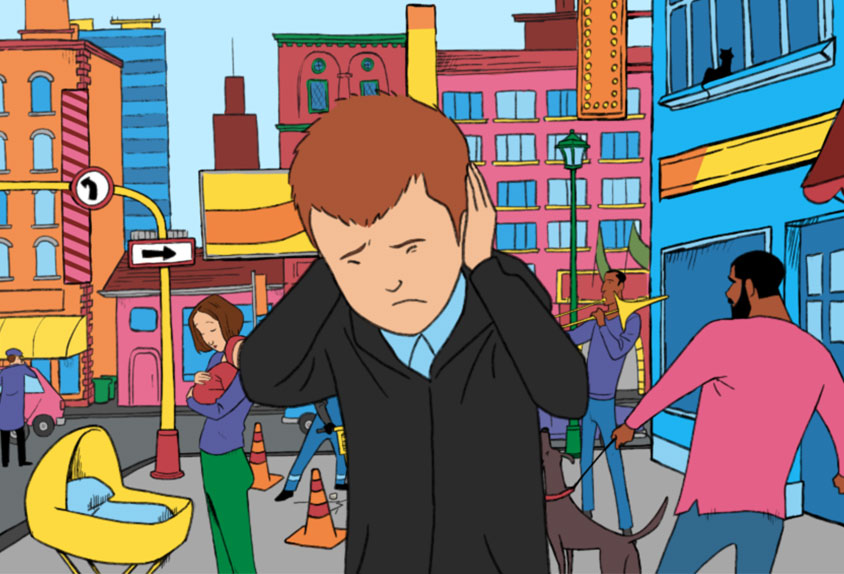
A man stands alone and looking confused in a busy street scene.

Was it because he was dressed like everyone else? 
Was it because he wasn't rocking in his seat and counting cards? 
Was it because he didn't look disabled? 

Last week a Facebook user posted a photo of a man on a Melbourne tram and detailed her encounter with him as she saw it. The man was accused of being intimidating and threatening towards young women and more specifically young women of Asian decent. He was accused of being a drug user and called predatory. The post attracted in excess of 80,000 likes and was shared more than 10,000 times.  Immediately comments appeared under the post that called for various violent acts to be perpetrated against the man in retaliation. Among the frenzy of people tutting and mindlessly sharing the story was a prominent feminist activist and author, Clementine Ford, someone who does not shy away from publicly revealing the faces and names of alleged perpetrators. Hastags such as #silentnomore and #fightlikeagirl were added to the story and assisted in its circulation. The story was also picked up by the mainstream media and was published by online news outlets. Several hours after the story broke people who knew the man contacted the original poster, privately and publicly, and advised her that the man had Autism and often asks for high-fives on the tram (this has not been verified). It was suggested that he was not a violent person and was well known to at least some tram users. The post was not removed by the poster until she began to receive threats via private message. The threats against the poster were not necessary however it was also not necessary for her to post an identifying image of the man on a public forum with inflammatory remarks attached.

So why? Why was this story shared en masse without any questions being raised about the veracity of her claims? And why, despite his face being shared 10,000 times, was this man all but invisible to the poster and the eager social media sharers?

Upon first reading the article it occurred to me that the man was socially inept; he hadn't physically grabbed anyone nor had he verbally abused anyone. Lets have a look at the way the interaction is written about:


Both of these examples have the female poster extrapolating a malicious intent from a few socially awkward encounters. I do not deny that the women on the tram possibly felt intimidated and frightened. I do not doubt for a second that the female poster believed that this man was behaving inappropriately. What I do doubt is our ability as a society to discuss and deal with issues relating to disability. 

The Daily Mail published a follow up article on the 10th October 2016 which reveals that the man on the tram has Autism. Doing a search of Facebook hash tags for the original posters name reveals a handful of admissions from those who shared the original article expressing regret that they hadn't looked into it more thoroughly before sharing. What is absent though is commentary from the original poster and high profile sharers like Clementine Ford.

Why are we afraid to talk about disability?

The behaviours exhibited by the man on the tram may have intimidated the women involved but how do we address that? There is an absence of dialogue surrounding people with disability; we don't talk about disability - we hide it and ignore it.

"Mentally ill people were popularly considered ‘dangerous’ and were confined and separated from the broader society. The location of asylums away from large population centres reflected this principle. Mental illness was out of sight, and mostly out of mind" 1

The segregation of those with mental illness and intellectual disability referred to above is not ancient history. In the 1960s the global civil rights movement led to the growth of advocacy for those who had been institutionalised; 'Mental Hospitals' and 'Asylums' were renamed and the Mental Health Act was established in 1962. It wasn't until 1992 with the establishment of the National Mental Health Policy that reform began. This policy was followed by the Report of the National Inquiry into the Human Rights of People With Mental Illness which found that, unsurprisingly, "People affected by mental illness are among the most vulnerable and disadvantaged in our community. They suffer from widespread systemic discrimination and are consistently denied the rights and services to which they are entitled."2

Currently there are only a handful of Psychiatric Institutions still operating in Australia and the general consensus among those treating patients is that integration in the community is beneficial to those suffering from mental illness or intellectual disability. I would also add that integration is also of benefit to the wider community especially within the school environment; encountering difference on a daily basis imparts an understanding and an acceptance that theoretical ethics can not. Perhaps if the original poster had encountered similar Autistic behaviours previously she may have reacted differently? Perhaps if society was more aware of disability in general we may have not seen these vicious social media attacks on an unnamed man?



Perhaps a better way to deal with this would have been to speak directly to the tram driver or having taken the picture she could have spoken to the police about the incident. The police may have been aware of the man if he is a frequent traveller and may have been able to contact him or his family to deal with the issue head on. They may have also been able to direct her to resources that could assist in the future should she encounter him again. No one has the right to make someone feel unsafe, however when we are dealing with mental illness or intellectual disability we can not expect that the same awareness around personal space for example exists. 

We, as a community, need to educate ourselves about disability. We need to see disability as part of OUR lives even if we may not necessarily be affected by a disability ourselves. Maybe then we will be able to deal with incidences like this in a way that doesn't result in public shaming and torrents of abuse. 

*** Since writing this article I have noticed a few anti-feminist websites and bloggers posting equally vicious and awful things to social media about the original poster and others who shared the post. I don't blame the woman involved for being frightened nor do I blame 'feminism'; what is lacking is an acceptable and inclusive dialogue about disability - nothing about us, without us!


If you or anyone you know is affected by challenging behaviours in children or adults who are on the Autism Spectrum you may find the following resources helpful: 


Other:


Monday, March 10, 2014

Time to Think Big, in Very Little Ways


In this piece Christine Regan talks about the little steps that start the big journeys...

I want to share some of my own recent experiences when the intention of being person-centred did not match what happened in real life.  The people involved did not recognise the contradictions and were certainly embarrassed when they did. The service-centred system is deeply entrenched in our psyche. We need to dig it up and compost it.


I have been lucky enough to be travelling about this year doing lots of talking about people with disability and the opportunities that the future could hold. I talk about people with disability having choice and making decisions, and how person-centred approaches could benefit people and families, community and society, services and government.


I mostly do this as part of my paid role and I am sometimes given a speakers gift for my presentations. In the past it has been a bottle of wine. This delighted my partner because I am prone to migraine and a major migraine trigger for many years has been grapes and grape products. Therefore it is his spousal duty to drink the very nice wine when I receive it; the least he can do really.


Over the years, I have also received engraved goblets, a tea set and flowers all cherished. (Note to Tax Office: all duly declared at work for pecuniary interests).


But lately I have received two rather lovely pieces of original artwork done by people with intellectual disability. This delighted me, firstly because of the thoughtfulness of the gift and secondly because the work was original and attractive, the quality was very high and the presentation was impressive. On each occasion, I was profoundly moved by the gift. Worth more than money. I quickly turned over the work to see the name of the artist, knowing I would not recognise who they were but wanting to see their name and appreciate their art in any case. 


Each time the label said the name of the group or disability service where the artwork was done, not the name of the artist. I was very disappointed. Each gift was for a speech on person-centred approaches. I asked if I could find out the name of the artist and was told probably not. 


I did not want to insult or embarrass my hosts on either occasion but found the contradiction very telling. These were forward- thinking organisations that wanted me to challenge their thinking and staff in a presentation that brought stories and new ways to conceive of people with intellectual disability as experts in their own lives towards inclusion and participation. 


What happened here in the labelling of the original artwork was the recognition of the service, not the celebration of the artists, as would be customary outside the disability sphere, for regular artists in ordinary life.  


Another occasion recently occurred in a deep conversation with the CEO of a disability service organisation.  This CEO is a person who genuinely wants to move their organisation towards a truly person centred way of working, to extend this to the skills of all staff.


The CEO was describing the meetings they have been holding for people with intellectual disability and families in their services. Hats off to the organisation for holding these seminars.  The CEO was frustrated and anxious that the people and families, after considerable explanation, did not yet grasp what individualised approaches and person-centred planning was all about.   In this candid exchange it became clear to me that, with all good intentions, the CEO had been trying to onvey individualised approaches and person-centred planning to people and families from the perspective of the services and organisation. No wonder the people did not understand.  It is simply not possible  to explain individualised approaches and person-centred planning from any viewpoint other than that of a person with disability. That is the point. It is person centred, and it should be explained as such. 


During our discussion, the savvy CEO immediately saw the contradiction and started to plan how to re-design the seminars from scratch to involve people with intellectual disability in exploring person-centred approaches. 


Nobody gets this stuff right all the time, we are all human. There is, however, a fundamental shift going on that involves people with disability, regardless of their support needs, being recognised for their goals, preferences, talents, attributes, their personalities. Some people may need communication support, assistance with decisions, time to process, someone alongside them and so on. The biggest change is that the person with disability is the primary consideration, at the centre, no longer merely ‘the end point of service deliver system’ as I was once told many years ago. But this requires very big thinking down to very little details, if we want to get it right.


In a three hour presentation this year to people with disability and families, I was confronted with a very hostile customer, the father of an adult woman with intellectual disability with very high support needs.  This was part of a series of seminars over several days in regional NSW to talk about individualised approaches and person-centred planning and what is happening at national and state levels.  The seminar had about 60 people attending.   

This father sat in the front row with his arms crossed and heckled me on several of my introductory points. He was genuinely and desperately worried for his daughter, but his anxiety overflowed on that day with me as a target.  When next he spoke I asked him about his daughter, what she would like, and he dismissed me but then quietened. 


Before the meeting adjourned for morning tea, I told the story of the course that my partner and I did last year on person-centred planning. This was where I painfully learned that you DO NOT want your mother (i.e. me!) to do your person-centred plan. I painfully learned how I needed to find a way to give my daughter Erin her own voice, separate from me, so she can design her own goals and preferences. This was such a good lesson for me as a mother, painful and exciting, and we have enabled Erin to do this.


During morning tea, this desperate father came up to me and asked me for a quiet word.  I must admit, experience has taught me to expect the worst, to smile and try to be gracious. But this father had a tear in his eye. He told me that he had just realised that he had always made the decisions for his daughter. He had never actually asked his adult daughter what it was that she wanted.  After this seminar, he was going straight home to ask her what she wanted in life and begin to talk with her about it.  For them the story begins.


The little steps start the big journeys. Simply putting the artist’s name on the canvas. Simply starting from the person’s viewpoint first. Asking what someone wants in decisions that affect them. These are fundamental. They are still new for many people with disability. Big thinking in little ways. We need to be mindful.


Christine Regan has been a Senior Policy Officer at Council of Social Service NSW (NCOSS) since 1998. Since June 2011, she has convened the NSW Disability Network Forum, a consultative and issues forum for non-government non-industry peak disability representative, advocacy and information organisations.


Christine also convenes the Assistive Technology Community Alliance NSW working to improve the provision of equipment to people with disability in NSW and is a member of the Ministerial Reference Group on Person Centred Approaches as well as a number of community sector committees and collaborative groups. In 2012, Christine completed a three-year term as a Board member of the NSW Anti-Discrimination Board. When not at NCOSS, Christine is Vice Chair of the NSW Council for Intellectual Disability as well as the Vice President and NSW delegate on the National Council on Intellectual Disability. In the Nepean area, Christine is Chairperson of Dare to Care, a local disability activist group. 


Christine is the proud mother of three adult children, a daughter and two sons. Her daughter Erin is 36 years old, has Down syndrome and lives at home with Christine and her partner.


Monday, August 5, 2013

Decisions, decisions, decisions.

We all make them, yet sometimes we need reminding of what our rights are around making decisions.

We came across this great video produced by Speak Out Advocacy in Tasmania - who are an organisation working in advocacy for people with a disability. 

This video talks about what decisions are and what rights we have around making them. It's designed to teach young people with intellectual disability about choice and decision making.

Check it out below:


Tuesday, July 13, 2010

Guest Posting from Alison Richardson

After contacting the Coordinator of the First Flight Crew I have come back with a prompt response from Ms Alison Richardson herself!!! Not only did she offer a bit of information about the fantastic group, but she also offered some wonderful pictures to be put on my blog. Special mention to the verse offered by Ana Nguyen at the end of the post. I highly recommend you check them our yourselves!


Alison Richardson

First Flight Crew are an eight piece hip hop outfit from Sydney managed Accessible Arts’ Creative Program Coordinator for Western Sydney, Alison Richardson. “First Flight Crew is about reaching new audiences outside of the disability sector & bringing to them an explosion of beat boxing, rap, dance & projections exposing the talent an spunk of this unique group” says Alison.

The crew are taught by legendary Aussie hip hop artist, Morganics & sprung out of their strong desire to dance, create original music, rap and beat box. The crew was formed in late 2008 & have performed from Bondi to Blacktown including Sydney’s largest Hip Hop festival, Platform 3 at CarriageWorks, Hip Hop projections 5 at Parramatta Riverside & as part of Powerhouse Museum’s recent 80s exhibition.

First Flight Crew member, Ana Nguyen says of being in the crew, “We want tell stories & we want to give the voiceless a chance to say so. We want to do something that will stand out from the crowd. We want to give the crowd the best impression as possible.”

For more information on the First Flight Crew contact Alison on arichardson@aarts.net.au or call 9251 6499 (ext112) or check out the Facebook site or website.

More from Ana:

I hope that this is a way to educate others in some way


And this proves that we can do anything.


We'll break the rules and the stereotypes...


And by being part of the First Flight Crew,


I'm going to prove the critics wrong


That yes, we can do anything.


This is the record of the truth, I can tell you to be honest.


We want tell stories & we want to give the voiceless a chance to say so.


We want to do something that will stand out from the crowd.


We want to give the crowd the best impression as possible.


That’s what I want.

What a great sneak peak : )