Friday, August 18, 2017

Independent Information (and IDEAS) Being Axed by NSW Government

IDEAS, the expert independent information providers, among many important advocacy organisations, are being axed by the NSW state government in June 2018.

IDEAS has been in service to people with disabilities, their families and carers since 1981. Cumulatively with the other organisations on the chopping block, there are hundreds and hundreds of  years of lived disability experience and sector knowledge, which will not be available to the largest single minority population in NSW.

Independent information services have to be a sustained practice. They should not replace or prevent new entrants to the market, and disparate means of distribution, but IDEAS asserts that it is only fair to have a trusted source that people may use to get a gold standard of information, that is customised to the person’s access needs, to support their decision making. 

The markers of these information services are:
  1. They should be unconflicted (that is service providers information is conflicted by their offer of service contracts from which they profit)
  2. They should be independent, that is, away from government, away from the Agency and away from direct service provision
  3. They should be accurate
  4. They should be timely
  5. They should be relevant
  6. They should be value for money
  7. They should be free to people with disability, their families carers and supporters
  8. They should have diverse distributive channels in an “omni” environment, so web, phone, letters, e-mails, community face to face engagements, newsletters, enewsletters and all the digital and social realm.
  9. The data must be maintained. Records must have a process of accession and de-accession.
  10. They should be “trusted” services and known to be on the side of people with disabilities . 
As the NDIS starts to serve unfunded participants in greater numbers, the schisms at the interface of health, education and transport will become more apparent. The cohort of people who will be unfunded participants in the NDIS scheme will be around 2,090,000 people living with disability. Their number of carers is around 394,000 persons.


IDEAS predicts that the most urgent of these is health. The ‘wrangle for nothing about us without us’ is real and the health system, and its specialties are largely unprepared. This is in an environment where people with disability have determination to be treated as whole persons and with the attitudinal shifts required to be treated as a person not as a condition. 

Concurrently there has not been nearly enough time, resources or determination to do the community capacity building, and develop greater individual capacity amongst people with disability to self-advocate in the mainstream systems of health, education, transport, work, puberty, sexual health, travel and relationships.

Information Services, Awareness Services and Disability Inclusion education need to be expanded to meet these obvious burgeoning needs.

Acknowledgement needs to be made in that the digital divide is greater than then bandwidth alone. This is a financial, educative, social and age marked engagement. The choices need to be there, because even if people with disability may be very proficient in the digital world, that may be intermittent due to money or other issues.

If independent information services are not a sustained investment, then the  NDIS risks losing choice and control for individuals and their engagement in mainstream provisions in their life domain. 
What can you do to help?

At IDEAS we always say that it is not about us, it is about the thousands of customers we serve every year with free accurate information, but now it really is about us. 

We need your help to tell your state local member, the state Minister for Disabilities, Mr. Ray Williams, and the Premier Ms Gladys Berejyklian that without IDEAS, people like you will have no one to go to for free accurate independent information that is not selling anything to make your choices truly yours. 

Can you help us remind them that they won't know what they've got till it’s gone, and that you still need IDEAS to stand by you in the transition to the National Disability Insurance Scheme, whether you have a funded package or not? We counted you in, and now we are counting on you. Here are the contact details for Ray Williams and Gladys Berejyklian: 
  • Ray Williams - email: castlehill@parliament.nsw.gov.au or call 02 8882 9555
  • Gladys Berejyklian - use this online form: https://www.nsw.gov.au/contact-us/contact-the-premier/ or call 02 9439 4199

If you would like assistance to get your message to the Premier, Minister or Local Member please call the IDEAS info team at 1800 029 904. If you would be happy to share your IDEAS story with us to try and get in the media, please let Diana Palmer  our Executive Officer know on 1800 029 904, or mgr@ideas.org.au

Thursday, July 13, 2017

Review of the DIYModify App

Hillary Wilde, IDEAS Database Support reviewed the DIY Modify App, an app for people looking to modify their existing homes.


The DIYModify app is an excellent information resource for people wanting to modify their existing homes for increased mobility and accessibility, in and around, their homes.

It is developed by HMInfo (Home Modification Information Clearinghouse – a website providing free, universally accessible, evidence-based design resources), which is part of the University of New South Wales’ Faculty of the Built Environment.

The app provides descriptions, diagrams and a limited price guide for accessibility related items. It is laid out very well aesthetically, providing a very simple and easy to understand user experience.
However, some of the usability features are a bit clunky. Having to rely on the “Next” button to move to the next page is not as user friendly or intuitive as it could be. The button is small and is a white button on a white background, which doesn’t stand out straight away.

A lot of time was spent trying to use the standard swipe gesture to move to the next screen to no avail. It is understandable needing a ‘next’ button for page readers, but both standard finger gestures and buttons can be utilised simultaneously, and perhaps this would create a smoother end user experience.

Another consideration would be to include accessible light switches and adjusting light switch heights, as well as benchtops etc. as further options.


Ultimately, integration with the HMInfo database to provide links to suppliers in the end-user’s location should be considered a top priority for the developers of this app. All in all, this app has great potential and is well thought out and developed. 

For more information about the app or modifying your home, contact IDEAS or call 1800 029 904. 

Tuesday, June 6, 2017

Light up your night with Vivid


[Image description: The Sydney Opera House lit up in colours of pinks and blue in an abstract design during the Sydney Vivid Festival in 2017. Image source: Sydney Vivid website.]

Running from 26th May to 17th June, Sydney’s Vivid Festival is the largest of its kind in Australia. And we are pleased to see the continued investment by the Festival organisers into making the event more accessible year on year. 

This year’s festival has even more sensory friendly events, audio described and Auslan interpreted events and wheelchair accessible areas than ever before, to make the festival an event that everyone can enjoy. 

The event is split into three areas: Vivid Light, Vivid Music and Vivid Ideas. 

Vivid Light


Vivid Light is the main attraction for most visitors to Vivid and where light art installations are projected onto the side of iconic Sydney buildings such as the Opera House, Customs House, and The Museum of Contemporary Art. 

Additionally, there are standalone art pieces and sculptures dotted throughout precincts across the city. These include Barangaroo, Chatswood, Darling Harbour, Opera House, Taronga Zoo and the Rocks, amongst others. 

There are 58 installations that are wheelchair friendly, 67 that are audio described, 1 Companion Card and 1 that is sensory friendly. 

From ethereal columns, to sunflowers, to the harbour bridge and beyond to the Sydney Opera House, there really is a vast array of interactive and beautiful lights displays. 

For more information about the light installations, visit: https://www.vividsydney.com/light/accessibility/ 


Vivid Music


Vivid Music is a dynamic program of cutting-edge music including live performances and music collaborations from local and international artists. 

There is a multitude of music events across the city. An example of an accessible, Hearing Loop friendly experience is Dianne Reeves, who is a jazz vocalist. This show takes place in the City Recital Hall which is an accessible and inclusive venue. Featuring a T-Loop system, National relay Service is supported, as are Companion Cards and offers lift access, accessible toilets and seating. 

There are a number of accessible music events taking place with more information available here: https://www.vividsydney.com/event/music

Vivid Ideas


Vivid Ideas lets visitors connect with leaders and learn new skills through a series of lectures and discussions. 

Taking Artists with Disability Seriously


This event discusses how theatre makers, visual artists and dancers with disability get taken seriously by bringing together findings from across Europe, the US and UK where professional inclusive arts are explored. 

Three recent Winston Churchill Fellows, Sarah-Vyne Vassallo (Murmuration), Gabrielle Mordy (studio A) and Alison Richardson (RUCKUS) headline the event, with a panel discussion chaired by the CEO of Accessible Arts. 


There are many more interesting events taking place throughout Vivid Ideas. For more information visit here: https://www.vividsydney.com/ideas/accessibility/ 

There are many more resources available at the Vivid Festival website including an interactive accessible map, information on interactive tours and volunteers who can assist. 
Or if you need more assistance, contact IDEAS on 1800 029 904. 

Monday, April 3, 2017

Being Female and Living with a Disability in Rural Australia


In partnership with Women with Disabilities Victoria, Women’s Health Goulbourn North East (WHGNE) carried out a study which highlighted a number of concerning barriers for women with disabilities living in rural communities.

There are worrying trends exposing discrimination and harassment, as well as longer-term health and well-being effects.

The study found that the main barriers included:

  • Transport 
  • Medical supplier choice
  • Escaping disability medical model

According to the Australian Bureau of Statistics, in 2014 people with a disability were less likely to have had daily face-to-face contact with family or friends living outside the household, compared to those who did not have a disability (16% compared with 20%). With community transport standards varying wildly and almost non-existent transport links, it is easy to see why people with disability in rural communities suffer from social isolation.

With the exception of main towns, access to public transport is very poor. Veteran Affairs appear to have a better handle on understanding taxi subsidies, but clients and sometimes even taxi operators struggle to understand them.

If living with a disability rurally, there is generally less choice of medical suppliers, with perhaps one service provider supplying “everything”, transport, accommodation, work, access to day and community engagement programmes. And if there are not strong enough advocates for that individual defining acceptable service standards to operate by, then there is an increased risk of less access and poorer standards.

Often, the medical model of a person’s disability defines them and escaping can be difficult. This keeps an individual isolated except for accessing their medical supports.

Community culture can play an important role on the isolation and inclusion that a person with disability can have. Although culture is driven by a community, individuals can benefit. If a person is recognised by their name or belonging to a particular family, their neighbours and fellow community members speak about the individual as a whole, regardless of their disability. This can provide positive acceptance and engagement at all levels within the community from education, social, church and sports.

Although social isolation can be rife, there are some positive stories of rural communities pulling together and embracing an individual’s unique differences.

Julie, a young 50 year old woman was involved in the community world music choir for some years. A great director, great choristers, great repertoire of world music, drumming and dancing in a rural location. She suffered a medical misadventure which rendered her very ill for a long time and without a voice.

After she was well enough she approached the choir director and asks if she could return to the choir (because she loved the music). However, she wished to be an elite lip syncer and enjoyed the music around her, the dance, and the fellowship of the other choristers. The director had no qualms with it, however, realised that he has to put it to the choir. At the next rehearsal, Julie had two minutes to introduce herself by telling them about her condition as much as she felt comfortable.
After her introduction and lip syncing audition, she was wholly accepted into the choir. Since she joined, there have been a number of additional members join, one who has a visual impairment, another who has had a stroke but can sing.

The moral of the story is that from small things, big things grow. And with the right support and choices to make informed decisions, people with disability should not feel isolated.

Do you have a disability or care for someone with a disability and live in a rural community? Are you looking for information to make better decisions? Contact IDEAS on 1800 029 904 or visit us at www.ideas.org.au

Friday, February 24, 2017

Disability Future Planning - Wills and Trusts

Being the carer of a person with a disability carries huge responsibility. What happens though, when you are no longer able to look after that person? This can be majorly concerning for you, especially when it relates to family members. The majority of individuals with disability can make active decisions about their future, however, there are some people who are unable to participate directly within that process.

In these circumstances, you may wish to provide ongoing financial assistance for family members but are confused by the financial and legal jargon, are unsure how things should be structured, what questions to ask and where to go for further assistance.

The following provides an overview into the different areas, however, is by no means legal documentation or advice. You should seek the services of a professional lawyer when consulting about your future financial wishes.  

What is a Will?


A Will is a legal document that clearly sets out how you wish your assets to be distributed after you have passed away. Ensuring that your Will is up-to-date is the best method for protecting your assets and making sure that they are distributed in the way that you wished.

It is probably the most important document you will sign, therefore, it is imperative that you seek legal guidance and expertise when preparing it.

If you haven’t prepared a Will, no one will know how you want your assets to be split up and who should receive what. Your assets will be distributed to a set formula.

What are Assets?


An asset is an item of property that is owned by a person or company and is regarded as having value.
Examples of assets can include jewellery, artwork, savings accounts, houses, land and car. There are a lot more examples available.

What is a Trust?


A trust is a legal concept that can look complex, but when explained, are easier to understand.
A trust is a legal obligation placed on one person, called the trustee, to look after the assets of the trust for the benefit of another person or a number of people, called a beneficiary or beneficiaries.
A trust is a good way to control the assets for the benefit of a person with disability. A trust can continue to look after some of the interests of a person with disability after your death. It is a structure you set up to operate before or after your death, which can continue into the future.

The main decisions required to make up a trust are:

- Who will be the trustees?
- How will the assets be divided up fairly between the person with the disability and other family members?
- What accommodation and care options should be provided for?
- How much discretion and direction should the trustee have? 

What do Trustees do?


The trustee is the person or persons who have the right to administer and control the trust’s assets, but only for the benefit of the beneficiary, in this example, the person with disability.

The recipient will gain from the trust, without having control over the trust itself.

Who should be appointed trustee?


This is an extremely important decision, however, legal structures do not always guarantee that individuals will do the right thing.

That person should share the same views about how your family member should be looked after by the trust.

What is a Special Disability Trust?


A Special Disability Trust is the provision of social security and veterans’ affairs means test concessions, set up by the Australian Government to help families with planning their estates. A Special Disability Trust can be set up by anybody for a person with severe disability, as long as certain legislative conditions are met.

People are encouraged to make their own provision for accommodation and care costs for family members with severe disability. This type of trust may alieve concerns about how funds held in trust may affect entitlements. However, if the assets are limited and reduction of social security entitlements is not a significant risk, a Special Disability Trust may not be relevant.

Trusts and Wills and when to choose the right option


You do not have to make special arrangements for a family member with disability. This will be dependent upon the abilities of the person with disability, available resources and future wishes.
If the person can manage their own money or through an informal process, there is less need for special arrangements. They can be left money through your Will or Trust as other family members would. There are certain times when special arrangements should be put into place:


- If the person’s disability affects their mental capacity (intellectual disability, brain injury, mental illness or dementia) – they may need help with managing money or assets
- Or if you want to keep more control than usual over how family resources are used in the long-run


Issues for Consideration


Information to take to the Solicitor


If you would like a more accessible version of these questions, contact IDEAS' Information Officers on 180 029 904 or contact us. 

Easy English Wills

It is essential that everyone has an understanding of what wills are and how they would like their assets to be distributed. The following Easy English guide is a template to help every one with the planning process. 

Information sourced from: A Resource for people planning for the future, Easy English Planning Guide, NDIS Help. 


Monday, January 30, 2017

Growing Demand for Cricket Creates All Abilities Leagues


In Australia, cricket and summer go hand-in-hand. Its’ popularity evident in the number of series and tournaments that occur during the summer season, from Boxing Day Tests, through to the Big Bash League. It is no wonder that cricket is Australia’s number one participation sport.  

However, for some Aussies donning the whites, grabbing a bat and going out onto the cricket pitch isn’t as easy as it sounds, or should be. People with disability often have a desire to participate but barriers exclude them.

Not for much longer though. New, all abilities, integrated leagues in Victoria and Western Australia have been created (as well as South Australia and NSW).

The aim of the leagues are to create inclusive environments for players and to bridge the gap between able-bodied players and persons with disability, whether physical or intellectual.

Games are played on the same venues and at the same time as other games, with only minimal moderations to build confidence and create inclusiveness.

Participants have expressed excitement about the inclusive leagues “I see this as another way to make friends and to keep fit”.

The success of the leagues could not have been achieved without the determination and determination from volunteers and members of the cricket clubs to bring these leagues to fruition.


For more information about inclusive sports clubs and activities in your area, contact IDEAS on 1800 029 904 or visit ideas.org.au. 

Tuesday, January 10, 2017

Where does hope lie, when leaders aren't even embracing diversity? 

[Image depicts actress Meryl Streep holding her Golden Globe and giving her acceptance speech]

At the recent Golden Globes, during her acceptance speech, Meryl Streep, in an unnamed accusation, highlighted the incident where Donald Trump, the US President-elect, mocked a reporter with a disability.

There was huge outcry from media, celebrities and the general public. Donald Trump retaliated saying that Meryl was ‘overrated’ and denied mocking the reporter.

Whatever your thoughts about Meryl Streep, Donald Trump and Hollywood in general, she did raise some very important points.

If a person in a position of leadership, of power, can humiliate by mocking an individual in such a public forum, where they are unable to defend themselves, then what hope do the underrepresented in society have?

Humiliation is a form of bullying. If leaders are doing it, then others perceive it as an acceptable form of behaviour, giving permission to do it.

For too long, mocking, bullying and humiliation have been rife in society. Yes, there are certain attributes that make a leader such as confidence, stoicism and passion, yet there are so many other attributes that make a great leader such as open-mindedness, integrity and inspiration.

Perhaps some of the best leaders are those from a diverse background, where their abilities outweighed their disabilities. From large companies such as the founder of Braun Corporations to previous US President Roosevelt, knowing what opportunities inclusiveness brought made them great leaders, which is something that perhaps some of today’s leaders should think about implementing.

Luckily here in Australia, we are seeing far more stories about embracing diversity and greater rates of inclusiveness. Leaders, please take note: embrace diversity, realise that every person has different strengths and that there is opportunity to grow in every strength, whereby no opportunity is missed.

Wondering how you can become the next leader, why not get information from IDEAS on 1800 029 904 or ideas.org.au. 

Monday, December 12, 2016

Accessible film screening gives unique opportunity


IDEAS recently sponsored the Access All Areas Film Festival Gala Screening, which took place on 4th December. It offered audiences the opportunity to experience the new Australian film, Red Dog: True Blue with a variety of accessible features and environments.

Red Dog: True Blue opens in cinemas on Boxing Day.  The world premiere of the film took place the night before the Gala Screening so the Gala audience were among the first people in the world to enjoy the film. It was important to the Festival organisers, The Bardic Studio, to offer this experience to people who so often have to wait until a film comes out on Blue ray. They hope to offer a new Australian film every year.

The film was popular with the audience and quite a few people said they’d been moved to tears at the end. There was an atmosphere of celebration as people expressed their pride in the standard of this new Australian film and chatted about their favourite moments. The two Red Dogs, Abby and Saffie, who were brought along by their generous handler Jamie, received an abundance of cuddles at the end of the screening as guests left the cinema.

This year, the Gala Screening moved to Event Cinemas Parramatta and was held on a Sunday at 11am. Many long term supporters attended and shared their experience of the growth and development of the Festival. There were also a lot of people attending for the first time and it was exciting to see the diversity of the audience.

The Gala screened in three screening rooms concurrently.  The first screening was with an audio description read live by Frances Mathey from Ericsson who also wrote the audio description for the film. The second screening was with open captions and Auslan interpretation by Yasmin. The third screening was a relaxed screening where people were welcome to be themselves and enjoy the film in whatever way they wished and move around as they needed to. There was also a chill out area adjacent to the screening room.

The organisers worked with Westfield Shopping Centre to create a document that detailed the best ways to access the building and get to the cinema complex. For the first time this year a Visual Story was created for the cinema complex and the film.

The 2016 Access All Areas Gala Screening stepped up the access offered by commercial cinema environments this year and the organisers are determined to build on those steps in 2017. They welcome feedback from the disability community, particularly ideas about additional features, supports or information that they can provide to enable more people to experience cinema with as much ease as possible. If you’d like to contribute your ideas please email jacqueline@bardicstuio.com.au

Tuesday, December 6, 2016

The Wiggles embrace sign language to create better accessibility


The Wiggles have been entertaining children for over 25 years. Their fans are diverse, loved by children in many countries, languages and, of differing needs.

They have recently embarked on their Dance, Dance the Wiggles Big Show, bringing entertainment to thousands of children across Australia. One defining feature about The Wiggles (and in large part to their success) is their ability to communicate with children. One of the main features (in addition to the music naturally) of this show is the inclusion of two large screens on stage featuring children signing, or Auslan, to all of The Wiggles’ songs.

Emma, more commonly known as “The Yellow Wiggle”, also ‘signs’ during the concert. Emma is passionate about making The Wiggles’ music accessible for everyone. Emma speaks about her passion for inclusiveness in this recent interview on Sunrise: https://youtu.be/AeGtTLPj80g. She has also recently embarked on a video combining Auslan and dance to a Justin Timberlake song: https://youtu.be/0IuOzO5YCAA.

Is this merely a momentary trend that will pass, or does it finally mean that children with disability are fully part of mainstream community?

Admittedly, there are definitely more occasions where children from all walks of life are appearing in mainstream advertising. Kmart recently featured an advert where one of the stars was a little girl who had Down Syndrome: https://youtu.be/eS3XwyNUsAE.

Whilst these are fantastic examples of companies and brands supporting inclusiveness through greater access to their music, products and services, here’s hoping that this is not a passing trend and is an opportunity for people with disability to live just like everyone else.

For more information on anything related to Auslan, why not contact the team at IDEAS on 1800 029 904 or visit www.ideas.org.au

Thursday, October 13, 2016

The Man on the Melbourne Tram

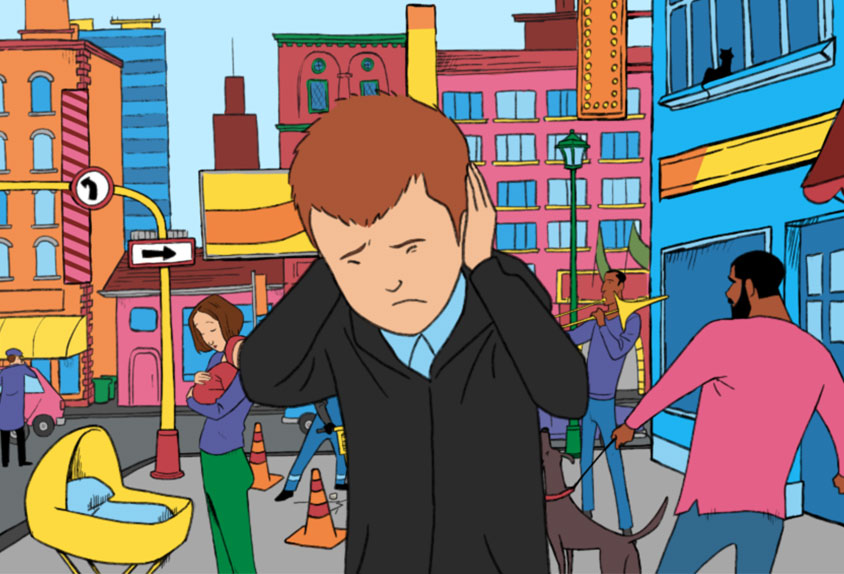
A man stands alone and looking confused in a busy street scene.

Was it because he was dressed like everyone else? 
Was it because he wasn't rocking in his seat and counting cards? 
Was it because he didn't look disabled? 

Last week a Facebook user posted a photo of a man on a Melbourne tram and detailed her encounter with him as she saw it. The man was accused of being intimidating and threatening towards young women and more specifically young women of Asian decent. He was accused of being a drug user and called predatory. The post attracted in excess of 80,000 likes and was shared more than 10,000 times.  Immediately comments appeared under the post that called for various violent acts to be perpetrated against the man in retaliation. Among the frenzy of people tutting and mindlessly sharing the story was a prominent feminist activist and author, Clementine Ford, someone who does not shy away from publicly revealing the faces and names of alleged perpetrators. Hastags such as #silentnomore and #fightlikeagirl were added to the story and assisted in its circulation. The story was also picked up by the mainstream media and was published by online news outlets. Several hours after the story broke people who knew the man contacted the original poster, privately and publicly, and advised her that the man had Autism and often asks for high-fives on the tram (this has not been verified). It was suggested that he was not a violent person and was well known to at least some tram users. The post was not removed by the poster until she began to receive threats via private message. The threats against the poster were not necessary however it was also not necessary for her to post an identifying image of the man on a public forum with inflammatory remarks attached.

So why? Why was this story shared en masse without any questions being raised about the veracity of her claims? And why, despite his face being shared 10,000 times, was this man all but invisible to the poster and the eager social media sharers?

Upon first reading the article it occurred to me that the man was socially inept; he hadn't physically grabbed anyone nor had he verbally abused anyone. Lets have a look at the way the interaction is written about:


Both of these examples have the female poster extrapolating a malicious intent from a few socially awkward encounters. I do not deny that the women on the tram possibly felt intimidated and frightened. I do not doubt for a second that the female poster believed that this man was behaving inappropriately. What I do doubt is our ability as a society to discuss and deal with issues relating to disability. 

The Daily Mail published a follow up article on the 10th October 2016 which reveals that the man on the tram has Autism. Doing a search of Facebook hash tags for the original posters name reveals a handful of admissions from those who shared the original article expressing regret that they hadn't looked into it more thoroughly before sharing. What is absent though is commentary from the original poster and high profile sharers like Clementine Ford.

Why are we afraid to talk about disability?

The behaviours exhibited by the man on the tram may have intimidated the women involved but how do we address that? There is an absence of dialogue surrounding people with disability; we don't talk about disability - we hide it and ignore it.

"Mentally ill people were popularly considered ‘dangerous’ and were confined and separated from the broader society. The location of asylums away from large population centres reflected this principle. Mental illness was out of sight, and mostly out of mind" 1

The segregation of those with mental illness and intellectual disability referred to above is not ancient history. In the 1960s the global civil rights movement led to the growth of advocacy for those who had been institutionalised; 'Mental Hospitals' and 'Asylums' were renamed and the Mental Health Act was established in 1962. It wasn't until 1992 with the establishment of the National Mental Health Policy that reform began. This policy was followed by the Report of the National Inquiry into the Human Rights of People With Mental Illness which found that, unsurprisingly, "People affected by mental illness are among the most vulnerable and disadvantaged in our community. They suffer from widespread systemic discrimination and are consistently denied the rights and services to which they are entitled."2

Currently there are only a handful of Psychiatric Institutions still operating in Australia and the general consensus among those treating patients is that integration in the community is beneficial to those suffering from mental illness or intellectual disability. I would also add that integration is also of benefit to the wider community especially within the school environment; encountering difference on a daily basis imparts an understanding and an acceptance that theoretical ethics can not. Perhaps if the original poster had encountered similar Autistic behaviours previously she may have reacted differently? Perhaps if society was more aware of disability in general we may have not seen these vicious social media attacks on an unnamed man?


Perhaps a better way to deal with this would have been to speak directly to the tram driver or having taken the picture she could have spoken to the police about the incident. The police may have been aware of the man if he is a frequent traveller and may have been able to contact him or his family to deal with the issue head on. They may have also been able to direct her to resources that could assist in the future should she encounter him again. No one has the right to make someone feel unsafe, however when we are dealing with mental illness or intellectual disability we can not expect that the same awareness around personal space for example exists. 

We, as a community, need to educate ourselves about disability. We need to see disability as part of OUR lives even if we may not necessarily be affected by a disability ourselves. Maybe then we will be able to deal with incidences like this in a way that doesn't result in public shaming and torrents of abuse. 

*** Since writing this article I have noticed a few anti-feminist websites and bloggers posting equally vicious and awful things to social media about the original poster and others who shared the post. I don't blame the woman involved for being frightened nor do I blame 'feminism'; what is lacking is an acceptable and inclusive dialogue about disability - nothing about us, without us!


If you or anyone you know is affected by challenging behaviours in children or adults who are on the Autism Spectrum you may find the following resources helpful: 


Other:


Tuesday, August 16, 2016

NDIS Portal Glitch Stretches to 8 Weeks


Glitches with the National Disability Insurance Agency’s portal and payment system are persisting with many service providers and NDIS participants questioning the Government’s lack of action.
The National Census website, which was brought down by alleged hack attempts, was immediately scheduled for investigation and repair to bring the site back online. In comparison the NDIS portal, through which participants manage their funds and make payments to their providers, has been working inconsistently for the last 8 weeks. As the weeks roll by one starts to wonder if the delays are a reflection of the Government’s commitment to the NDIS.

The Australian reported that some providers have had to turn away patients due to the delays in payment;
Speech pathologist Diana Bleby said she was owed more than $5000 by the NDIS and was now drawing on a line of credit to sustain her practice in Adelaide’s northern suburbs.
“I don’t work as a speech pathologist to earn the big bucks,” Ms Bleby said. “We get some payments from the NDIS but it’s highly unpredictable. My line-of-credit loan is getting less and less flexible and I need to pay rent and contractors.” (Puddy, 2016)

Where will this leave patients? It is more likely than not that the patients have had to sit on waiting lists in the first place  just to be seen by their providers  and now they face cancelled appointments and breaks in treatment because providers can not afford to continue working without payment.  As a break in treatment could have devastating effects on a patient’s progress, many families are being forced to pay for treatments themselves to avoid being thrown back on to a waiting list.

Kate Bradbrook's family includes two children who are eligible for NDIS funding, a 12-year-old and a five-year-old. The elder child had her plan approved before the end of June but despite a planning meeting, the younger child's approval has been delayed because of the glitch.

 "My planner told me to start booking therapy when we had our planning meeting," Ms Bradbrook said. "She said it wouldn't take long for his plan to be approved. It's ready to go, everything's done, but because of the current issues with the system, his plan can't be approved."

Ms Bradbrook said NDIS told her any therapy he had received would not be covered until his plan was approved. "I'm probably up to $1,000 out of pocket, which I've been told won't be reimbursed," she said. (Waldhuter, 2016)

Unfortunately it seems that the general public’s disregard for people with disability resonates with the Government. How else can we explain the difference in the way that the census website was dealt with? Is it that the Census is a money-making endeavour where the NDIS is seen as a drain on the public purse or is there a more deep-seated issue at hand? With the NDIS we were told that PWD would finally have a voice; we can HIRE our own providers and we can FIRE them if they don’t live up to standards. The promise of self-determination and self-management, through the use of the NDIS Portal, has ended up in a huge technological bungle and no one who can do anything about it seems to care.

For too long PWD have been pushed to the fringe of society; we have been told we need to be grateful for what we get and not to complain about poor service levels. The introduction of the NDIS is the biggest change to the social services landscape since the introduction of the universal healthcare system in the 1970s.  It promised increased funding, autonomy and integration. It promised that PWD would be in control of their lives and their futures. Sadly these glitches have, at least temporarily, taken away the promise of self-management and replaced it with worrying delays and unexpected expense.

The Government needs to reassert its commitment to the NDIS by ensuring the portal is fully functioning and by taking the concerns of PWD and service providers seriously.

On the 5th August Minister for Social Services and Disability Services Christian Porter announced a review of the implementation of NDIS IT system would be undertaken and has made assurances that what they deem as the ‘central issues’ with the portal have already been resolved.

The NDIA has advised that service providers will be compensated for the delays in payment and that affected parties can contact the NDIA on 1800 800 110 to discuss.

Works Cited

Puddy, R. (2016, August 4). Cash-strapped providers ‘turn away patients’ due to NDIS bungle. The Australian. Retrieved from http://www.theaustralian.com.au/national-affairs/health/cashstrapped-providers-turn-away-patients-due-to-ndis-bungle/news-story/6d412d8af84c1a9e12fa3d6816f6088b
Waldhuter, L. (2016, August 10). NDIS providers entering eighth week without payment as families face approval delays. Retrieved from http://www.abc.net.au/news/2016-08-10/ndis-providers-entering-their-eighth-week-without-payment/7711754


Tuesday, June 16, 2015


Doing justice to disability: 

the upside of TEDx’s Stella bungle


The social media storm of blowback around the TEDX initiative in memory of Stella Young is as unfortunate in some frames as it was predictable if you like me had been working in the so-called ‘disability sector’ for some time. Lessons learned in this exciting and truly revolutionary space include the security of understanding that true person centredness which has a robust listening frame without prejudice for each individual living their own whole lives are instructive. As is indeed the position of generous grace required for us all to recognise the barriers shared by all persons with disability regardless of the particular condition or so-called impairment with which they come. There is much attitudinally to be left behind from the old systems for Australians to step into the space of active and sovereign citizenry for any person who lives with disability. One of the first steps to be of course recognising that the person is whole and their life experiences add always to the complex and rich mosaic of diversity in our common wealth.

Tuesday, April 21, 2015

Making schools safer and more welcoming for LGBTQI students

IDEAS publishes this as part of the creative commons license provided by the Conversation. Should any issue be raised in this that is important for you , a family member or person with disability Call us for Free on 1800 029 904.IDEAS has free live chat on our website at www.ideas.org.au.  


Family  Planning NSW is also a great resource on 1300 658 886.

Heterosexual students don’t benefit from not knowing about homosexuality. from www.shutterstock.com.au

The Australian Curriculum is largely silent on the needs of lesbian, gay, bisexual, transgender, queer and intersexed (LGBTQI) students and only discusses sexuality explicitly in the health and physical education curriculum. Other key curriculum areas do not make explicit mention of sexuality and gender diversity, and if it is not mentioned in the curriculum documents, teachers will be reluctant to teach it.
Much debate has surrounded the implementation and review of the national curriculum, including its political, cultural and religious agendas. However, the reality for LGBTQI students is that the curriculum oppresses and silences those who don’t conform to heterosexist ideals.

Sexuality isn’t just for adults

To consider LGBTQI people are of all ages is to acknowledge that young people possess a sexuality and have a gender identity. To think of young people as sexual beings is often taboo.
Information about adolescent sexuality, particularly homosexuality, remains largely ignored in schools. Young people are denied access to the most evident parts of gay and lesbian culture – particularly bars and social clubs - with legal, social, financial and political barriers that prevent any legitimate participation by young LGBTQI people.
A wide range of research, including the report Writing them In, indicates that heterosexism continues to dominate the hidden and explicit curricula of Australian schools. This reinforces and perpetuates homophobic oppression, reflecting wider societal attitudes to sexuality and gender diversity.
Heteronormativity, the presentation of heterosexuality as the “natural” manifestation of human sexuality, remains prevalent in Australian schools and in the curriculum. Many elements in society are reluctant to address or even acknowledge teenage sexuality, particularly homosexuality.
This has implications for young people. At a time when they are first aware of their emerging sexual desires and while they attempt to forge a sexual identity, they are often presented with little accurate information about sex. This is particularly true for same-sex-attracted teenagers.

If they can’t learn it at school, where can they?

Young people need affirmation that their desires and feelings are natural and “normal”. If they can’t learn about their sexuality in a safe environment where the messages are targeted, they may turn to the internet. Not all of the material they’re looking for online is appropriate for someone of their age, or encouraging that what they are experiencing is natural and okay.
Young adult imaginative literature, historical resources and inclusive texts in language classrooms provide safe places for discussions about homosexuality, sexual diversity and gender variance.
The recently implemented Australian curriculum remains largely silent about sexual diversity. When it is mentioned explicitly, sexuality is largely delegated to the biological. The physical health and development curriculum mentions sexuality, but only in terms of sexual health, reproduction and the physical aspects of sexuality.
Within this context there is little room for the myriad expressions of sexuality beyond the biological and physical. The emotional, spiritual and lived experiences of LGBTQI people and the contributions they have made to society are nowhere to be found in the curriculum.
It is therefore necessary for schools to provide information and a supportive environment for this transition from being assumed to be heterosexual, to self-identifying and being recognised as lesbian, gay, bisexual or transgender, to be as painless as possible. A multicultural curriculum enhances opportunities to promote understanding about difference.
However, there are barriers that prevent open dialogue about LGBTQI issues in schools. These include religious, moral or political objections; limited numbers of openly LGBTQI teachers and students; limited opportunities to interact with openly LGBTQI people in school activities; and stereotyped hysteria about recruiting young people to homosexuality.
As a supposedly progressive and liberal society, we need to discard our prejudices to ensure that all young people are protected and safe at school. Homophobic violence remains a significant issue in Australian schools.
Discrimination is based on a lack of understanding of sexual diversity. The only way to eliminate discrimination is through open discussions about sexuality inclusive of sexual diversity, and the promotion of tolerance and inclusion.
In rural Australian communities, where resources for same-sex-attracted youth are limited, stretched or non-existent, schools may be the only safe place for such discussions.
There is no benefit for heterosexual students to remain ignorant of homosexuality, and for same-sex-attracted youth to feel isolated and marginalised.
Regional, rural and remote Australia have unacceptably high statistics on youth suicide, drug and alcohol use/abuse and mental health issues related to sexuality and gender diversity. These alone are clear indicators that discussion of sexual and gender diversity in the Australian curriculum and schools can’t be ignored anymore.